
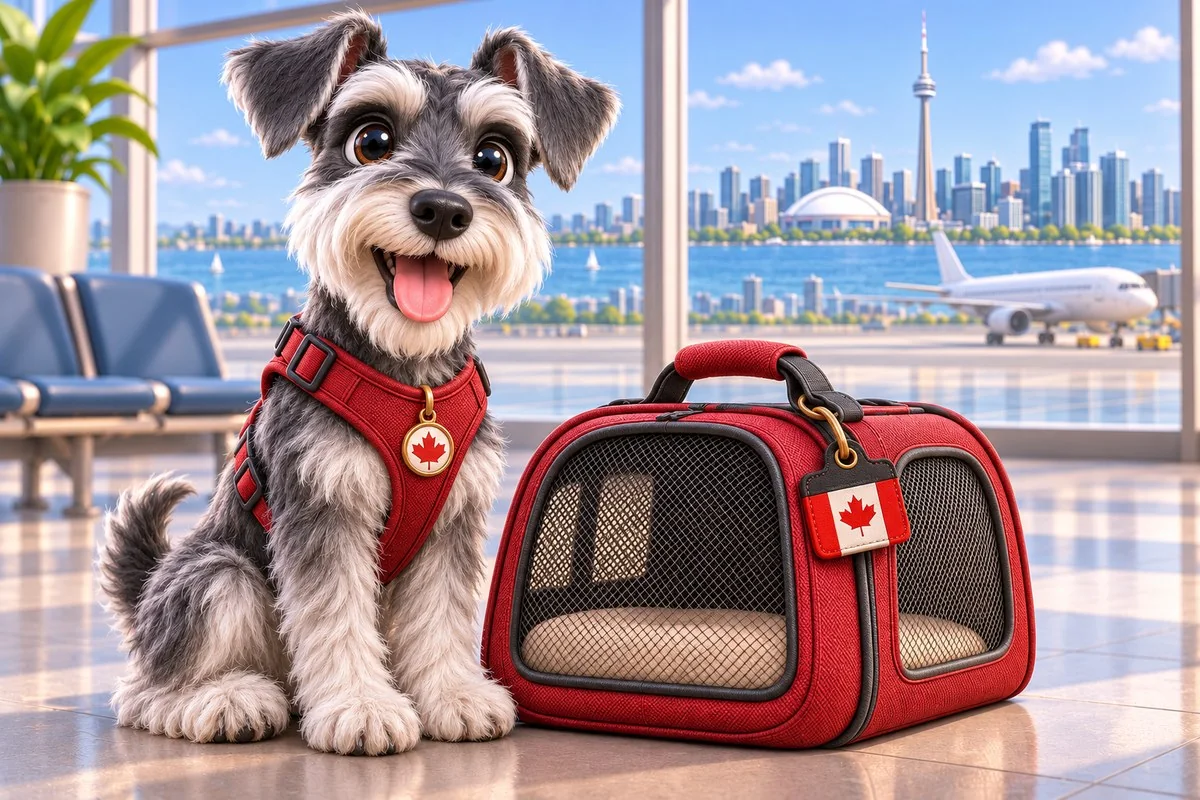
Entry requirements for each direction
Outbound: U.S. to Canada
Entry documents for Canada
Return: Canada to U.S.
Documents for returning to the U.S.
Airline approval and country entry requirements are separate. Prepare the documents for each direction and confirm a pet place on every flight.
Choose and reserve the right flight
Start with the operating airline for every leg. Give it your travel dates, cabin, dog and carrier measurements, and ask for confirmation of a pet place in both directions. Include any U.S. connecting flight when discussing the booking.
If another airline operates a codeshare or connection, ask that airline to confirm its rules for that leg. Keep your pet booking confirmations with the travel documents.
Choose the correct Canadian entry requirements
Use CFIA’s import tool with Dog, Personal, your dog’s age, accompanied by owner and United States. For an owner-accompanied personal dog at least three months old arriving from the U.S., the reviewed requirements call for a current rabies vaccination certificate. Your dog must also appear healthy and meet transport requirements.
Have the licensed veterinarian prepare a clear certificate in English or French. Check that it identifies you and your dog and includes the vaccination date, vaccine details, validity and the veterinarian’s signature. Keep the physical original available for inspection.
CFIA: select the requirements for your personal pet · CFIA: personal-dog requirements and certificate details
Check health paperwork and the microchip for the whole trip
USDA’s Canada instructions do not require a separate Canadian-entry health certificate for the owner-accompanied personal-pet situation described here. Your airline may still request health paperwork, so ask about its requirements before the vet appointment.
Although CFIA does not require a microchip for a personal pet dog, the U.S. return does. Arrange the chip and its readability before departure. Also check that your dog will meet the U.S. minimum age on the return date; being allowed into Canada does not establish eligibility to return.
USDA APHIS: taking a pet from the U.S. to Canada · CFIA: personal-dog requirements and certificate details · CDC: return from rabies-free or low-risk countries
Keep the border and connection plan clear
Have your dog’s records and proof of ownership ready to show Canadian border staff. Use the CFIA result for your exact circumstances if someone else will accompany the dog, if ownership is changing or if the dog travels for a commercial purpose.
For a connection, check the operating airline on each flight and where you will clear the border. If the journey includes a third country, check that country’s animal-transit and entry rules too. Keep your connection times realistic for the required procedures.
Prepare your dog’s return to the U.S.
Review the return before leaving home. CDC considers your dog’s travel history during the six months before U.S. entry. Germany, France and Canada are not on its current high-risk list; a visit elsewhere can change the requirements. Use the CDC Navigator for your dog’s complete history.
For a dog that has only been in rabies-free or low-risk countries during that period, arrange a CDC Dog Import Form receipt. At U.S. arrival the dog must be at least six months old, look healthy and have a microchip readable by a universal scanner. For a direct return from Canada, the receipt should name Canada as the departure country.
Also check APHIS and destination-state requirements, then reconfirm the airline’s pet reservation and permitted arrival airport. Save the receipt and supporting records where you can show them at check-in and the border.
CDC: choose the requirements for your dog’s return · CDC: return from rabies-free or low-risk countries · USDA APHIS: additional U.S. dog-entry requirements
Match the guide to your visit
This is a private visit with your own dog traveling in the cabin and returning to the U.S. A dog being bought, adopted, fostered, transferred to another owner or transported for a commercial purpose can fall under different Canadian requirements. Use the appropriate CFIA category rather than the personal-pet result.
Check any provincial or local restrictions at your destination and the pet rules of your accommodation and onward transport before you finalize the trip.
Airline guides for this journey
Use the guide for the airline operating your flight. Each guide states its route and cabin scope; flight schedules and pet-space availability must be confirmed with the airline.
U.S. TO CANADA
Air Canada
Cabin rules, booking and return-flight conditions.
Read the guide
U.S. TO CANADA
American Airlines
Cabin rules, booking and return-flight conditions.
Read the guide
U.S. TO CANADA
Delta Air Lines
Cabin rules, booking and return-flight conditions.
Read the guideYour preparation checklist
Common questions
Which airline guides are available for Canada?
The available guides cover Air Canada and American Airlines and Delta Air Lines. Each states its route and cabin scope. Confirm the exact flight and pet reservation with the operating airline.
Does my dog need a health certificate for Canada?
For the owner-accompanied personal-pet situation in this guide, USDA identifies rabies proof as the Canadian entry document. Check your airline separately for any health paperwork it requires.
Does my dog need a microchip for this round trip?
The U.S. return requires a readable microchip even though Canada does not require one for a personal pet dog.
Can I use this guide for an adopted dog I am collecting?
Use CFIA’s import tool and the CDC Navigator for that situation. The private round trip described here does not cover ownership transfers.
Official sources for this journey
- CFIA: select the requirements for your personal pet
- CFIA: personal-dog requirements and certificate details
- USDA APHIS: taking a pet from the U.S. to Canada
- CDC: choose the requirements for your dog’s return
- CDC: return from rabies-free or low-risk countries
- CDC: current high-risk country list
- USDA APHIS: additional U.S. dog-entry requirements